
Blueberry Lemon Sourdough Bread – Zesty & Delicious
Blueberry Lemon Sourdough Bread is more than just a breakfast staple; it’s a symphony of tangy, sweet, and subtly sour notes that dance on your palate. There’s an undeniable magic that happens when the bright zest of lemon meets the plump burst of blueberries, all woven into the complex, naturally leavened crum extractb of a sourdough loaf. It’s the kind of bread that transforms a simple morning into a moment of pure indulgence, making it a beloved choice for bakers and eaters alike. What makes this particular combination so special is the harmonious balance it strikes – the robust, earthy undertones of the sourdough starter are perfectly complemented by the vibrant zing of lemon and the juicy sweetness of blueberries. Each bite is an adventure, a delightful interplay of familiar comfort and exciting new flavor. Imagin extracte the aroma filling your kitchen as it bakes, a promise of the delicious experience to come.
Why You’ll Love This Recipe
This Blueberry Lemon Sourdough Bread is the perfect way to elevate your baking game and impress your taste buds. The tang of the sourdough provides a wonderful counterpoint to the sweetness of the blueberries, while the lemon adds a refreshing brightness that cuts through the richness. It’s incredibly versatile, wonderful toasted with butter, smeared with cream cheese, or even served alongside a savory meal. It’s a celebration of fresh flavors and the art of sourdough.
A Unique Flavor Profile
The true star of this Blueberry Lemon Sourdough Bread is its unique flavor profile. The natural fermentation of the sourdough starter develops a characteristic tangy depth that is unlike any other bread. When combined with the zesty punch of fresh lemon and the sweet burst of ripe blueberries, it creates a complex and utterly satisfying taste experience. It’s a bread that’s both comforting and invigorating, making it a true stand-out in any bread basket.
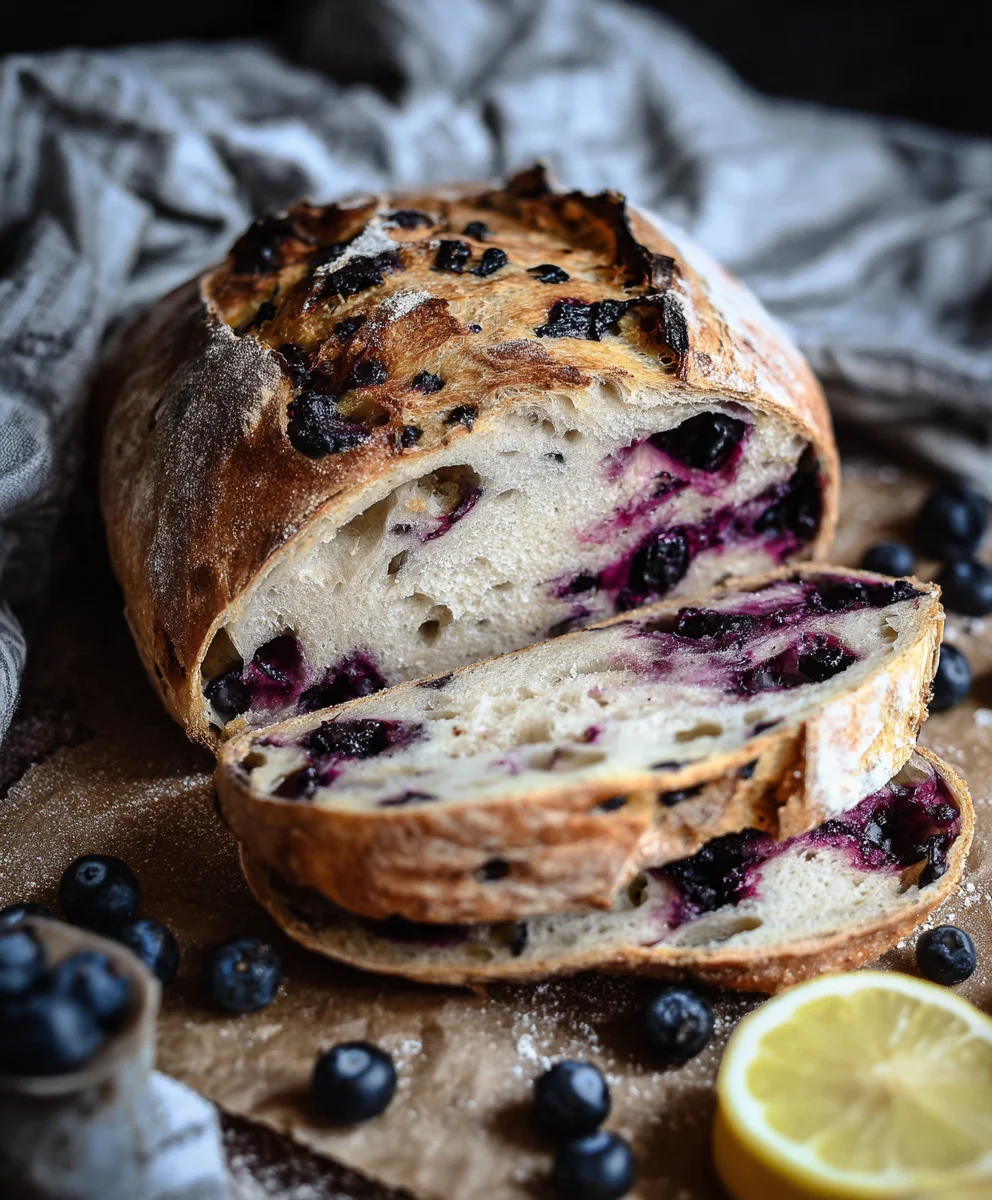
Ingredients:
- 3 cups bread flour
- 1⅓ cups lukewarm water
- ¾ cup sourdough starter ((active, bubbly, and well fed))
- 3 tablespoons white sugar
- 1 teaspoon salt
- 1¼ cup blueberries ((fresh is easiest))
- 1 tablespoon lemon zest
Preparing the Dough
Mixing the Base
The foundation of any great sourdough bread lies in a healthy, active starter. Ensure yours has been fed a few hours prior and is visibly bubbly and has doubled in volume – this is key for a good rise and that characteristic tangy flavor. In a large mixing bowl, combine the lukewarm water and the active sourdough starter. Whisk them together gently until the starter is mostly dissolved into the water. This initial step helps to evenly distribute the yeast and bacteria from your starter, setting the stage for fermentation. Next, add the bread flour and the salt to the bowl. It’s important to use bread flour here, as its higher protein content will develop the gluten structure needed for a good crum extractb and rise in your Blueberry Lemon Sourdough Bread.
Developing the Dough
Now, it’s time to bring everything together. Using your hands or a sturdy spatula, mix the ingredients until a shaggy dough forms and no dry flour remains. Don’t worry about developing the gluten too much at this stage; that will come with time and stretching. Cover the bowl with a clean kitchen towel or plastic wrap and let it rest for about 30 minutes. This autolyse period allows the flour to fully hydrate and the gluten to begin extract developing naturally, making the dough more pliable and easier to work with.
First Fermentation (Bulk Fermentation)
Stretch and Folds
After the initial 30-minute rest, it’s tigin extractto begin the series of stretch and folds. These are crucial for building strength and structure in the sourdough dough. With lightly floured hands, reach into the bowl, grab a portion of the dough from one side, stretch it upwards gently, and fold it over the center. Rotate the bowl a quarter turn and repeat this process four times, so you’ve folded the dough in on itself from all sides. This technique is much gentler than traditional kneading and is perfectly suited for sourdough. After completing the first set of stretch and folds, cover the bowl again and let it rest for another 30 minutes. You will repeat this stretch and fold process a total of four times, with 30-minute intervals in between each set. You’ll notice the dough becoming smoother and more elastic with each subsequent set of folds. This phase is where the magic of fermegin extracttion truly begins, as the yeast and bacteria work their way through the dough, producing gas and developing flavor.
Adding the Flavorings
Incorporating Blueberries and Lemon Zest
Once you have completed all four sets of stretch and folds and the dough feels strong and has increased in volume, it’s time to add the stars of our Blueberry Lemon Sourdough Bread: the blueberries and lemon zest. Gently fold in the fresh blueberries and the tablespoon of lemon zest. Be careful not to overwork the dough at this stage, as you don’t want to break down the blueberries too much, which can lead to a purple dough rather than distinct berry pockets. The goal is to distribute them evenly throughout the dough. The lemon zest will add a bright, aromatic counterpoint to the sweet blueberries and the tang of the sourdough. After incorporating the flavorings, let the dough rest for another 30 minutes, covered.
Shaping and Second Fermentation
Pre-Shaping and Bench Rest
Turn the dough out onto a lightly floured surface. Gently shape it into a round ball by pulling the edges towards the center and then flipping it over so the seam is on the bottom. Let the dough rest, covered loosely, for about 20 to 30 minutes. This bench rest allows the gluten to relax, making the final shaping easier.
Final Shaping and Cold Fermentation
Now, it’s time for the final shaping. Whether you prefer a round boule or an oval batard, gently shape your dough. For a boule, you’ll again be folding the edges towards the center, creating tension on the surface. If you’re making a batard, gently flatten the dough into a rough rectangle, then roll it up tightly from one end to the other, pinching the seam to seal. Place the shaped dough, seam-side up, into a floured banneton or a bowl lined with a floured kitchen towel. Cover it with plastic wrap or place it inside a plastic bag and refrigerate it for at least 12 hours, and up to 24 hours. This long, cold fermentation in the refrigerator is crucial for developing deep flavor and making the dough easier to score and handle. It allows the sourdough to slowly work its magic, creating complex flavor notes and a beautifulrum extractpen crumb.
Baking the Blueberry Lemon Sourdough Bread
Preheating and Scoring
About an hour before you plan to bake, preheat your oven to 450°F (230°C) with a Dutch oven or baking stone inside. If using a Dutch oven, place it in the oven as it preheats. Once the oven is fully heated, carefully remove the banneton with your dough. Invert the dough onto a piece of parchment paper or directly onto your preheated baking stone. Using a sharp knife or a lame, score the top of the dough with your desired pattern. A simple cross or a few shallow slashes will allow the bread to expand evenly during baking. Be decisive with your scoring; a dull blade can tear the dough.
Baking
If using a Dutch oven, carefully lift the parchment paper with the dough and gently lower it into the hot Dutch oven. Place the lid on the Dutch oven and bake for 25 minutes. The lid traps steam, which is essential for achieving a good oven spring and a crispy crust. After 25 minutes, carefully remove the lid from the Dutch oven. The bread will have risen significantly and will likely be pnon-alcoholic ale golden. Continue to bake, uncovered, for another 20-25 minutes, or until the crust is a deep golden brown and the internal temperature of the bread reaches 205-210°F (96-99°C). If you are baking on a stone without a Dutch oven, you’ll want to create steam in your oven by placing a pan of hot water on the bottom rack. Bake at 450°F (230°C) for the first 20 minutes with steam, then reduce the temperature to 425°F (220°C) and remove the steam pan, baking for another 30-40 minutes until the crust is well-developed and the bread is fully baked.
Cooling
Once baked, carefully remove the Blueberry Lemon Sourdough Bread from the oven and place it on a wire rack to cool completely. Resist the temptation to slice into it while it’s still warm; the internal structure needs time to set. Allowing it to cool completely will result in a much better texture and flavor. Enjoy your delicious, homemade creation!

Conclusion:
And there you have it – your very own homemade Blueberry Lemon Sourdough Bread! We hope you’ve enjoyed this journey of transforming simple ingredients into a delightfully tangy and fruity loaf. The combination of vibrant blueberries and zesty lemon creates a truly unique and satisfying flavor profile that is perfect for any occasion. Whether you’re enjoying a slice for breakfast, as a snack, or as part of a dessert, this bread is sure to impress. Don’t be afraid to experiment with serving suggestions; we find it’s fantastic toasted with a dollop of cream cheese or a drizzle of honey. For variations, consider adding a sprinkle of poppy seeds for extra texture or a touch of lavender for an aromatic twist.
We encourage you to embrace the sourdough process and savor the rewarding experience of baking your own bread. This Blueberry Lemon Sourdough Bread is more than just a recipe; it’s an invitation to create something truly special in your kitchen. Enjoy every crum extractb!
Frequently Asked Questions:
Q1: My Blueberry Lemon Sourdough Bread is a bit dense. What could I have done differently?
A dense loaf can sometimes be due to a few factors. Ensure your sourdough starter was active and bubbly before you began. Over-mixing the dough can also develop too much gluten, making it tough. Be gentle during the folding and shaping stages. Additionally, make sure your dough had sufficient bulk fermentation and proofing time, allowing it to rise properly before baking. Room temperature and starter activity can significantly impact this.
Q2: Can I use frozen blueberries in my Blueberry Lemon Sourdough Bread?
Yes, you absolutely can use frozen blueberries! It’s often recommended to toss them with a tablespoon of flour before adding them to the dough to help absorb some of the excess moisture they release as they thaw during baking. This prevents the dough from becoming too wet and aids in a more even bake.
Blueberry Lemon Sourdough Bread – Zesty & Delicious
A wonderfully zesty and delicious sourdough bread infused with sweet blueberries and bright lemon zest. Perfect for breakfast or an afternoon treat.
Ingredients
-
3 cups bread flour
-
1⅓ cups lukewarm water
-
¾ cup sourdough starter (active, bubbly, and well fed)
-
3 tablespoons white sugar
-
1 teaspoon salt
-
1¼ cup blueberries (fresh is easiest)
-
1 tablespoon lemon zest
Instructions
-
Step 1
In a large mixing bowl, combine the lukewarm water and the active sourdough starter. Whisk gently until the starter is mostly dissolved. Add the bread flour and salt, mixing until a shaggy dough forms. Cover and let rest for 30 minutes (autolyse). -
Step 2
Perform a series of four sets of stretch and folds, with 30-minute intervals between each set. With lightly floured hands, stretch a portion of the dough upwards and fold it over the center. Rotate and repeat four times per set. The dough will become smoother and more elastic. -
Step 3
Once all stretch and folds are complete and the dough has increased in volume, gently fold in the fresh blueberries and lemon zest, distributing them evenly. Be careful not to overwork the dough. Let the dough rest, covered, for another 30 minutes. -
Step 4
Turn the dough onto a lightly floured surface and pre-shape it into a round. Let it rest, covered loosely, for 20-30 minutes (bench rest). Then, perform the final shaping (boule or batard). Place the shaped dough, seam-side up, into a floured banneton or bowl lined with a floured towel. Cover and refrigerate for at least 12 hours, up to 24 hours. -
Step 5
About an hour before baking, preheat your oven to 450°F (230°C) with a Dutch oven or baking stone inside. Invert the cold dough onto parchment paper or a baking stone. Score the top of the dough with a sharp knife or lame. -
Step 6
If using a Dutch oven, carefully lower the dough into the hot Dutch oven, cover, and bake for 25 minutes. Remove the lid and bake for another 20-25 minutes, or until deep golden brown and an internal temperature of 205-210°F (96-99°C). If baking on a stone without a Dutch oven, create steam with a pan of hot water for the first 20 minutes at 450°F (230°C), then reduce heat to 425°F (220°C) and bake for another 30-40 minutes without steam. -
Step 7
Carefully remove the bread from the oven and place it on a wire rack to cool completely before slicing to allow the internal structure to set.
Important Information
Nutrition Facts (Per Serving)
It is important to consider this information as approximate and not to use it as definitive health advice.
Allergy Information
Please check ingredients for potential allergens and consult a health professional if in doubt.